Pages

Monday, August 31, 2015

Dame Daphne du Maurier, Lady Browning DBE (/ˈdæfni duː ˈmɒri.eɪ/; 13 May 1907 – 19 April 1989) was a British author and playwright.

Many of her works have been adapted into films, including the novels Rebecca (the film adaptation of which won the Best Picture Oscar in 1941) and Jamaica Inn, and the short stories The Birds and Don't Look Now. The first three film adaptations were directed by Alfred Hitchcock and the last by Nicolas Roeg.

Her grandfather was the artist and writer George du Maurier and her father the actor Gerald du Maurier. Her elder sister Angela also became a writer, and her younger sister Jeanne was a painter.

/

Works/
Fiction/

The Loving Spirit (1931)
I'll Never Be Young Again (1932)
The Progress of Julius (1933) (later re-published as Julius)
Jamaica Inn (1936)
Rebecca (1938)
Rebecca (1940) (du Maurier's stage adaptation of her novel)
Happy Christmas (1940) (short story)
Come Wind, Come Weather (1940) (short story collection)
Frenchman's Creek (1941)
Hungry Hill (1943)
The Years Between (1945) (play)
The King's General (1946)
September Tide (1948) (play)
The Parasites (1949)
My Cousin Rachel (1951)
The Apple Tree (1952) (short story collection, AKA Kiss Me Again, Stranger)
Mary Anne (1954)
The Scapegoat (1957)
Early Stories (1959) (short story collection, stories written between 1927–1930)[27]
The Breaking Point (1959) (short story collection, AKA The Blue Lenses)
Castle Dor (1961) (with Sir Arthur Quiller-Couch)
The Birds and Other Stories (1963) (republication of The Apple Tree)[29]
The Glass-Blowers (1963)
The Flight of the Falcon (1965)
The House on the Strand (1969)
Not After Midnight (1971) (short story collection, AKA Don't Look Now)
Rule Britannia (1972)
The Rendezvous and Other Stories (1980) (short story collection)

Non-fiction/
Gerald: A Portrait (1934)
The du Mauriers (1937)
The Young George du Maurier: a selection of his letters 1860–67 (1951)
The Infernal World of Branwell Brontë (1960)
Vanishing Cornwall (includes photographs by her son Christian, 1967)
Golden Lads: Sir Francis Bacon, Anthony Bacon and their Friends (1975)
The Winding Stair: Francis Bacon, His Rise and Fall (1976)
Growing Pains – the Shaping of a Writer (a.k.a. Myself When Young – the Shaping of a Writer, 1977)
Enchanted Cornwall (1989)

More here/
Wuthering Heights is Emily Brontë's only novel. Written between October 1845 and June 1846, Wuthering Heights was published in 1847 under the pseudonym "Ellis Bell"; Brontë died the following year, aged 30. Wuthering Heights and Anne Brontë's Agnes Grey were accepted by publisher Thomas Newby before the success of their sister Charlotte's novel, Jane Eyre. After Emily's death, Charlotte edited the manuscript of Wuthering Heights, and arranged for the edited version to be published as a posthumous second edition in 1850.

Although Wuthering Heights is now widely regarded as a classic of English literature, contemporary reviews for the novel were deeply polarised; it was considered controversial because its depiction of mental and physical cruelty was unusually stark, and it challenged strict Victorian ideals of the day, including religious hypocrisy, morality, social classes and gender inequality. The English poet and painter Dante Gabriel Rossetti referred to it as "A fiend of a book – an incredible monster ... The action is laid in hell, – only it seems places and people have English names there."

In the second half of the 19th century, Charlotte Brontë's Jane Eyre was considered the best of the Brontë sisters' works, but following later re-evaluation, critics began to argue that Wuthering Heights was superior. The book has inspired adaptations, including film, radio and television dramatisations, a musical by Bernard J. Taylor, a ballet, operas (by Bernard Herrmann, Carlisle Floyd, and Frédéric Chaslin), a role-playing game, and a 1978 song by Kate Bush.

More here/
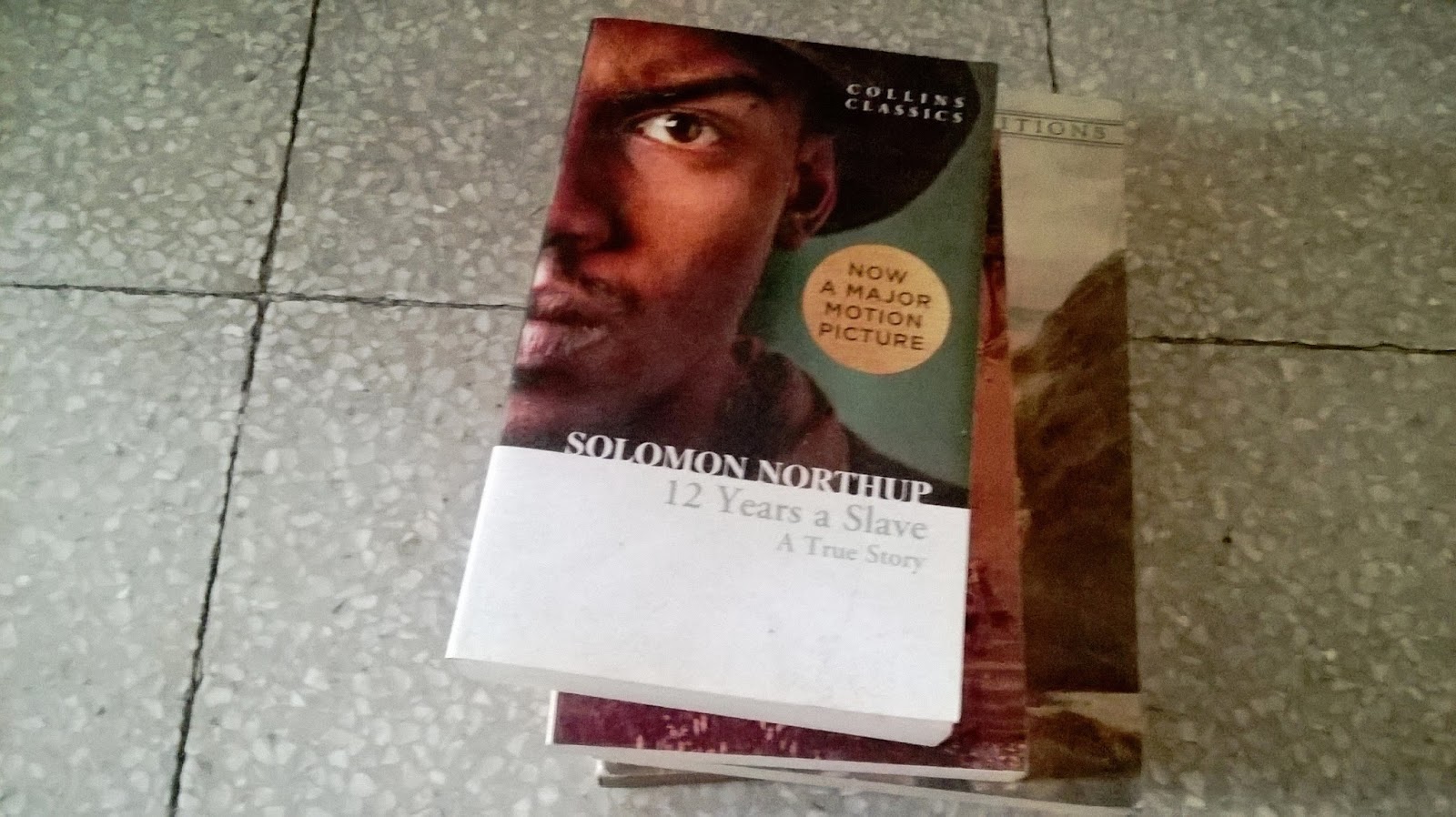
Twelve Years a Slave (1853) is a memoir and slave narrative by American Solomon Northup as told to and edited by David Wilson. Northup, a black man who was born free in New York state, details his being tricked to go to Washington, D.C., where he was kidnapped and sold into slavery in the Deep South. After having been kept in bondage for 12 years in Louisiana by various masters, Northup was able to write to friends and family in New York, who in turn secured his release with the aid of the state. Northup's account provides extensive details on the slave markets in Washington, D.C. and New Orleans, and describes at length cotton and sugar cultivation and slave treatment on major plantations in Louisiana.

The work was published eight years before the Civil War by Derby & Miller of Auburn, New York, soon after Harriet Beecher Stowe's best-selling novel about slavery, Uncle Tom's Cabin (1852), to which it lent factual support. Northup's book, dedicated to Stowe, sold 30,000 copies, making it a bestseller in its own right.

After being published in several editions in the 19th century and later cited by specialist scholarly works on slavery in the United States, the memoir fell into public obscurity for nearly 100 years. It was re-discovered on separate occasions by two Louisiana historians, Sue Eakin (Louisiana State University at Alexandria) and Joseph Logsdon (University of New Orleans). In the early 1960s, they researched and retraced Solomon Northup’s journey and co-edited a historically annotated version that was published by Louisiana State University Press (1968).

The memoir has been adapted as two film versions, produced as the PBS television movie Solomon Northup's Odyssey (1984) and the Oscar-winning film 12 Years a Slave (2013).

More here/
The Talisman Ring is a historical romance novel by Georgette Heyer, first published in 1936. Set in 1793, in the Georgian era, the action takes place in Sussex, where Heyer then lived.

Like several of Heyer's early novels including Regency Buck (1935) and The Corinthian (1940), The Talisman Ring blends the genres of romantic comedy and thriller. Jane Aiken Hodge describes it as a "neat comedy"[4] and "very nearly a detective story in period costume". In counterpointing an older and a younger couple, the novel is a forerunner of many of Heyer's later works, such as Frederica (1965). The Talisman Ring is also the first of Heyer's novels to feature characters from the Bow Street Runners.

More here/

/

Georgette Heyer /ˈheɪ.ər/ (16 August 1902 – 4 July 1974) was an English historical romance and detective fiction novelist. Her writing career began in 1921, when she turned a story for her younger brother into the novel The Black Moth. In 1925 Heyer married George Ronald Rougier, a mining engineer. The couple spent several years living in Tanganyika Territory and Macedonia before returning to England in 1929. After her novel These Old Shades became popular despite its release during the General Strike, Heyer determined that publicity was not necessary for good sales. For the rest of her life, she refused to grant interviews, telling a friend: "My private life concerns no one but myself and my family."

Heyer essentially established the historical romance genre and its subgenre Regency romance. Her Regencies were inspired by Jane Austen, but unlike Austen, who wrote about and for the times in which she lived, Heyer was forced to include copious information about the period so that her readers would understand the setting. To ensure accuracy, Heyer collected reference works and kept detailed notes on all aspects of Regency life. While some critics thought the novels were too detailed, others considered the level of detail to be Heyer's greatest asset. Her meticulous nature was also evident in her historical novels; Heyer even recreated William the Conqueror's crossing into England for her novel The Conqueror.

Beginning in 1932, Heyer released one romance novel and one thriller each year. Her husband often provided basic outlines for the plots of her thrillers, leaving Heyer to develop character relationships and dialogue so as to bring the story to life. Although many critics describe Heyer's detective novels as unoriginal, others such as Nancy Wingate praise them "for their wit and comedy as well as for their well-woven plots".

Her success was sometimes clouded by problems with tax inspectors and alleged plagiarists. Heyer chose not to file lawsuits against the suspected literary thieves, but tried multiple ways of minimizing her tax liability. Forced to put aside the works she called her "magnum opus" (a trilogy covering the House of Lancaster) to write more commercially successful works, Heyer eventually created a limited liability company to administer the rights to her novels. She was accused several times of providing an overly large salary for herself, and in 1966 she sold the company and the rights to seventeen of her novels to Booker-McConnell. Heyer continued writing until her death in July 1974. At that time, 48 of her novels were still in print; her last book, My Lord John, was published posthumously.

More here/
“A God can get tired too.”

In Aleksei German’s art house, hard to watch Russian film, ‘Hard to Be a God.

Above the clouds, above Guwahati.

I clicked this photo during a flight from Delhi to Guwahati. It was monsoon reason, yet that day, the sky was clear and the clouds were fluffy white. And it was a completely weird feeling regarding the clouds from above. Normally, I would look at the cloud from below. This time I had a vantage point.

And it was a gaze that could make you feel profoundly lonely and profoundly insignificant.

As I mulled over the meaning of life looking at the clouds and thinking, what will happen, right now, if the flight lost its control and went down, and then, without any warning, I was humming this silly song from that silly movie called Khel (1992), ‘…naa hai zameen naa aasman, laye kaha ho hamko… badal nagar hai meraa ghar, laya jahan hu tumko …”

An anticlimax!
The guava tree outside our house.

The guava tree has a special place in our family. My father had a transferable job and during our childhood, we travelled from city to city, from house to house and for some reason, in every house, there will be a guava tree. When, after his retirement, my father built this house in Lankeshwar, Guwahati, the first tree that grew near the gate was a guava tree, laden with those marvellous green fruits with pink-red kernels.

A staple of Assamese homes, the godhuli gopal flower, called so because it blooms only in the evening, after the sun has waned. Godhuli is evening and gopal is baby Krishna.

Mirabilis jalapa (the four o'clock flower or marvel of Peru) is the most commonly grown ornamental species of Mirabilis, and is available in a range of colours. Mirabilis in Latin means wonderful and Jalapa is a not uncommon place name in Central and North America. Mirabilis jalapa is said to have been exported from the Peruvian Andes in 1540.

In Pakistan it is called gul adnan (Urdu: گل عدنان‎), gul-e-abbas (Urdu: گل عباس‎).
In Sri Lanka it is called hendirikka (හෙන්දිරික්කා).
In Karnataka it is called sanje mallige ಸಂಜೆ ಮಲ್ಲಿಗೆ
In Tamil Nadu it is called andhi mandhaarai (Tamil: அந்தி மந்தாரை).
In Andhra Pradesh it is called chandrakantha & indraganti (Telugu: చంద్రకాంత).
In Kerala it is called naalumani poovu (Malayalam: നാലുമണിപ്പൂ, പതിറ്റടിമുല്ല).
In Maharashtra it is called gulabakshi (Marathi: गुलबक्षी).
In Bengali it is called sandhyamaloti (সন্ধ্যামালতি).
In Maithili it is called sanjhaa phool as it blooms in evening.
In Oriya it is called rangani.
In Punjabi it is called sham di sohnap which means evening beauty.
In Indonesia it is called bunga pukul empat.
In China it is called the "shower flower" (Chinese: 洗澡花; pinyin: xǐzǎo huā) or "rice boiling flower" (simplified Chinese: 煮饭花; traditional Chinese: 煮飯花; pinyin: zhǔfàn huā) because it is in bloom at the time of these activities.
In Hong Kong it is known as "purple jasmine" (紫茉莉).
The Turkish name is akşam sefası, which means "evening pleasure".
In the Netherlands and in France the name of the plant is Nachtschone and Belle de nuit respectively meaning "beauty of the night".
In Italy it is called "bella di notte", which means "beautiful during night".
In Persian it is called laleh abbasi (لاله عباسی).
In Japan it is called oshiroi-bana, as the white, powdery endosperm inside of mature seeds looks like oshiroi, the powder foundation used by geishas.
In Hebrew it is called Lilanit Rav-Gonit (לילנית רב-גונית)- meaning "Queen of the night".
In Namibia it is called Vieruurtjie as it starts to open at 16:00 until the morning
In Slovenia it is called "Nočna frajlica" - meaning "Night missy"
In Romania it is called "Regina nopții"-meaning "The Queen of the Night"
In philippines it is called "Prinsesa ng gabi" meaning "princess of the night"

More here/
Bel, or bael leaves, the leaves of the wood apple tree.

Aegle marmelos, commonly known as bael, Bengal quince,[1] golden apple,[1] stone apple, wood apple, bili,[2] is a species of tree native to India. It is present throughout Southeast Asia as a naturalized species.[3] The tree is considered to be sacred by Hindus. Its fruits are used in traditional medicine and as a food throughout its range.

More here/

/

The word bilva (bel tree) is usually used as bilva-patra (leaf of bel). It is a sacred tree having sacrificial importance. Leaves of this sacred tree are generally trifoliate. This trifoliate leaf is symbolic of Trikal (brahma, vishnu and mahesh), Three eyes of lord shiva, Trishakti (Volition, action and knowledge), three lingas and three syllables of Omkar.

The bilva tree itself is so holy and auspicious that its worship or its significance is mentioned in many puranas and other scriptures at various instances. Here below is a narration of "greatness of bilva" under 22nd chapter in vidyesvarasamhita of shivapurana.

"The bilva is the symbol of lord shiva. It is adored even by the gods. It is difficult to understand its greatness. It can only be known to a certain extent. Whatever holy centre there is in the world finds a place under the root of bilva. He who worships mahadeva in the form of linga at the root of bilva becomes a purified soul. He shall certainly attain shiva. He, who pours water over his head at the root of a bilva, can be considered to have taken his bath in all sacred waters in the earth. Verily, he is holy. Seeing the water basin round the foot of the bilva tree full of water, shiva becomes greatly pleased. The man who worships the root of a bilva tree offering scents and flowers attains the region of shiva his happiness increases, his family flourishes. He who places a row of lighted lamps at the root of bilva tree with reverence becomes endowed with the knowledge of truth and merges into shiva. He who worships the bilva tree abounding in fresh tender sprouts becomes free from sins. If a man piously feeds a devotee of shiva at the root of a bilva tree he reaps the fruit thereof, ten million times more than in the usual course. He who makes a gift of rice cooked in milk and ghee to a devotee of shiva at the root of a bilva tree will never become poor."

Mahant Rama Shankar of Banaras wrote quoting the Skanda Purana and explained the origin of Bilva tree, "One day while Parvati was resting some drops of sweat fell from her forehead on the mountain Mandara, from which grew the bel tree, Girija lives on the root of the tree, Maheswari on its shoulder, Dukshayani on its branches, Parvati among its leaves, Katyayani in its fruit, Gaori in its flowers while in thorns the numerous Saktis find a home. It is also believed that Lakshmi, the Goddess of Wealth, also lives in the bel tree."

Those who perform the puja of Shiva and Parvati devoutly, using the leaves, will be endowed with spiritual powers.

Lakshmyaascha stana utpannam Mahaadeva sadaa priyam,
Bilva vriksham prayachchhaami eka bilvam Shivaarpanam.
Darshanam bilva vrikshasya sparshanam paapanaashanam,
Aghorapaapasamhaaram eka bilvam shivarpanam.

Born from the breasts of Goddess Lakshmi, the Bilva tree is ever dear to Mahadeva. So I ask this tree to offer a Bilva leaf to Lord Shiva. To have darshan of the Bilva tree, and to touch it, frees one from sin. The most terrible karma is destroyed when a Bilva leaf is offered to Lord Shiva.Sri Bilva Shtakam (v. 6–7)

More here/
A parrot tries a guava, outside our home, next to a guava tree, in Lankeshwar Guwahati.

We were told during our childhood that guava is the favourite fruit of parrots. During my childhood, at our grandparents’ house in Tikrikilla in Meghalaya, the guava tree would be swarmed with the green-feathered birds, especially during the guava season.

Now, we do not see that many parrots in Guwahati. Even this one, trying the guava, is a pet, of a man who was passing by our house. And, my mother insisted that the bird should have the fruit.

Raj Kapoor and Nargis walks into the Oxford Book Store in CP, New Delhi.

A cutout of the couple, from the famous song, ‘Pyar hua, ikrar hua’ from the film Sri 420 adorns the entrance of the bookstore cum café. And, they get a colourful real umbrella.

A diary of Nick Cave, written in long hand, seen in the documentary-like feature, 20,000 Days on Earth.

/

20,000 Days on Earth is a 2014 British documentary musical drama film co-written and directed by Iain Forsyth and Jane Pollard. Nick Cave also co-wrote the script with Forsyth and Pollard. The film premiered in-competition in the World Cinema Documentary Competition at 2014 Sundance Film Festival on January 20, 2014. It won two Awards at the festival. The film released on September 17, 2014 in United States.

More here/

/

Nicholas Edward "Nick" Cave (born 22 September 1957) is an Australian musician, songwriter, author, screenwriter, composer and occasional film actor. He is best known as the frontman of Nick Cave and the Bad Seeds, established in 1983, a group known for its diverse output and ever-evolving line-up. Prior to this, he fronted the Birthday Party, one of the most extreme and confrontational post-punk bands of the early 1980s. In 2006, he formed the garage rock band Grinderman, releasing its debut album the following year.

Referred to as rock music's "Prince of Darkness", Cave's music is generally characterised by emotional intensity, a wide variety of influences, and lyrical obsessions with death, religion, love and violence. NME described him as "the grand lord of gothic lushness".

Cave has also worked as a composer for films, often in collaboration with fellow Australian musician Warren Ellis. Their films together include The Proposition (2005, based on a screenplay by Cave), The Assassination of Jesse James by the Coward Robert Ford (2007) and The Road (2009). Cave is the subject and co-writer of the semi-fictional "day in the life" documentary 20,000 Days on Earth (2014).

Upon Cave's induction into the ARIA Hall of Fame, ARIA Awards committee chairman Ed St John said: "Nick Cave has enjoyed—and continues to enjoy—one of the most extraordinary careers in the annals of popular music. He is an Australian artist like Sidney Nolan is an Australian artist—beyond comparison, beyond genre, beyond dispute."

More Here/
The Gurudwara Bangla Sahib in evening glow.

Gurudwara Bangla Sahib is situated in the heart of New Delhi’s Cannaught Place area. It is located on the east side intersection of Ashok Road and Baba Kharag Singh Marg. Originally, this place was the Bungalow (haveli) of Mirza Raja Jai Singh, hence the name Bangla Sahib. It’s original name was Jaisinghpura Palace. Mirza Raja Jai Singh was an important military leader of Mughal emperor Aurangzeb.

After the passing away of Guru Har Rai, the seventh Sikh Guru, Ram Rai and his masands (masand is derived from Arabic word masnad, meaning delegating authority of the sovereign) instigated Mughal Emperor Aurangzeb to issue a decree summoning Guru Harkrishan to his court. Ram Rai was elder brother of Guru Harkrishan. Guru Harkrishan decided to go to Delhi since he felt that the “sangat”, his followers had been misguided and he saw an opportunity in this to clear their misunderstandings. Meanwhile Sikhs of Delhi approached Mirza Raja Jai Singh, a strong devotee of Sikh Gurus to prevent any harm coming to Guru Harkrishan either by Aurangzeb or by the masands of Ram Rai.

Ram Rai when learned that Guru Harkrishan had accepted the summons to appear before Aurangzeb in his court at Delhi, started rejoicing since Guru Harkrishan had taken a vow not to appear before Aurangzeb. If Guru Harkrishan Comes to Delhi and refuses to meet Aurangzeb then definitely he will be arrested and suffer humiliation. Now Ram Rai felt that this act of Guru Harkrishan will surely lower his prestige among his followers and will pave the way for Ram Rai to declare himself as the true successor of Guru Har Rai.

Mirza Raja Jai Singh had made elaborate arrangements to receive Guru Harkrishan. Guru Harkrishan was received on the outskirts of Delhi like a royal guest of honor. Guru Harkrishan was accompanied by prominent Sikhs from his darbar and his mother Sulakhni.

More here/
“Where must we go?

We who wander this wasteland
In search of our better selves?”

The First History of Man

The end credit of George Miller’s mad and maddeningly wonderful Mad Max: Fury Road (2015)

Monday, August 24, 2015


“Hey, if you write about me, and you’ll probably have to, write that it’s hard to be a God.”

In Aleksei German’s ‘Hard to Be a God.

In the last issue of Neil Gaiman’s legendary graphic novel series, Sandman, there is an epilogue about a man named Hobbs, who is from the 15th Century, and who is immortal, following a friendship with the Lord of Dreams. Hobbs is now in today’s America and has a black girlfriend, who works in a Renaissance Fair. Hobbs accompanies her and he complains that the fair is nothing like the Middle Ages. For one thing, the Middle Ages stunk and there were excrements everywhere.

Nowhere is this aspect of excrements and dirt and total lack of hygiene during the Middle Ages is evident than Aleksei German’s Russian film ‘Hard to Be a God.’ Based on a book by the famous Strugatsky brothers, the film is a medieval tale disguised as a science fiction, where a group of scientists from modern day earth discovers an earth-like planet, which is still in the Middle Ages because Renaissance did not come, as the ruthless feudal lords of the planet decided to kill all free-thinking, creative men (you can probably read the whole thing as an allegory). The scientists decide to observe the society up close with any intervention. So, they send one of them to their midst, who presents himself as a Don and a descend of the Gods. He is scientifically aware in an ignorant society, yet he cannot help them, for he is forbidden to do so. Yet, as a story progresses, he cannot even distance himself from the plight of those people.

I cannot recommend you to watch this film in good conscience. It’s a difficult watch. There is enough much of dirt and grime to make you retch and this is just the surface. It’s a good thing that German decided to shoot the film in black and white. Yet, this is an extraordinary achievement, a film like none other.

Friday, August 21, 2015

Cambridge University Library digitises world’s first multicolour printed book

This is a spread from the world’s first multicolour printed book, a 17th Century artist manual that remained in print for over 200 years. The Manual of Calligraphy and Painting (Shi zhu zhai shu hua pu) was created in 1633 by the Ten Bamboo Studio, using a technique called polychrome xylography, invented by the studio's owner, the pioneering artist and printmaker Hu Zhengyan. The earliest and the finest example of multicolour printing anywhere in the world, comprising 138 paintings and sketches with associated texts by 50 different artists and calligraphers, the physical copy of the book is so fragile that it was never opened before the Cambridge University Library decided to digitise it. Making each image involved several printing blocks with different coloured ink, though the end result looks like hand-painted watercolor images. That effect was very cutting-edge at the time, as Hu was the first to use printing techniques that allowed for more delicate gradations of colour.

Thursday, August 20, 2015

The Spy Who Came in from the Cold

The Spy Who Came in from the Cold is a 1963 Cold War spy novel by British author John le Carré. It has become famous for its portrayal of Western espionage methods as morally inconsistent with Western democracy and values. The novel received critical acclaim at the time of its publication and became an international best-seller; it was selected as one of the All-Time 100 Novels by Time magazine. In 2006, Publishers Weekly named it the "best spy novel of all-time”.

In 1965, Martin Ritt directed the cinematic adaptation The Spy Who Came in from the Cold, with Richard Burton as Alec Leamas.

More Here/


Wednesday, August 19, 2015

Hard To Be A God

The past is another planet – they do things differently there. This monochrome dream-epic of medieval cruelty and squalor is a non-sci-fi sci-fi; a monumental, and monumentally mad film that the Russian film-maker Alexei German began working on around 15 years ago. It was completed by his son, Alexei German Jr, after the director’s death in 2013. If ever a movie deserved the title folie de grandeur it is this, placed before audiences on a take-it-or-leave-it basis: maniacally vehement and strange, a slo-mo kaleidoscope of chaos and also a relentless prose poem of fear, featuring three hours’ worth of non-sequitur dialogue, where each line is an imagist stab with nothing to do what has just been said.

What on earth does it mean? I have my own theory, of which more in a moment. Hard to Be a God is based on the 1964 novel by Arkady and Boris Strugatsky, whose later work Roadside Picnic was filmed by Andrei Tarkovsky in 1979 as Stalker. It is set in what appears to be a horrendous central European village of the middle ages, as imagined by Hieronymus Bosch, where grotesquely ugly and wretched peasants are condemned to clamber over each other for all eternity, smeared in mud and blood: a world beset with tyranny and factional wars between groups called “Blacks” and “Greys”. In the midst of this, what looks like an imperious baronial chieftain called Don Rumata, played by Leonid Yarmolnik, walks with relative impunity: this sovereignty is based on his claim to be descended from a god.

More Here/

/

This uncategorisable epic is set on another planet, but it feels extraterrestrial in every sense – the sort of visionary undertaking that, according to cinema’s usual commercial and narrative logics, ought not to exist. But director Aleksei German was one of the great hard cases of Russian cinema. His previous film Khrustalyov, My Car! – a Fellini-like nightmare about Stalin’s purges – was a daunting monolith of often inscrutable extremity. If that film was the Ulysses of Russian cinema, Hard to Be a God is surely its Finnegans Wake.

This epic was six years in the shooting, and German died in 2013 before he could finish it; it was completed by his wife and co-writer Svetlana Karmalita, and son, director Aleksei German Jr. The result may be an awe-inspiring folly rather than a fully realised masterpiece, but it’s radically out of the ordinary. Based on a novel by the Strugatsky brothers, whose Roadside Picnic inspired Tarkovsky’s Stalker, the film is set on a planet mired in a bloody, muddy version of the middle ages. The impenetrable narrative involves an earthling scientist operating undercover during the reign of a tyrannical warlord, but German’s prime concern is the hyper-detailed evocation of a hellish world in constant violent flux. It’s as if a time traveller had gone back and handed a movie camera to Brueghel or Bosch. As medieval fantasy goes, it makes Game of Thrones look like musical chairs.

More here/


/

Aleksei German, who has died of heart failure aged 74, was among the very last in a generation of film directors victimised by the Soviet Union's draconian attitude to the arts. As a result, since 1968 German had made only six films, one of them co-directed and one uncompleted at his death. Three of them were shelved for several years, and Khrustalyov, My Car! (1998), seven years in the making, was repeatedly bailed out by French money. German's reputation is based on only four films, all of them masterpieces.

Gradually, after the fall of communism in Russia, German's films were screened at cinematheques and festivals in the west. Khrustalyov, My Car!, the only one of his works that was not banned, provoked a mass walkout by critics at the 1998 Cannes film festival. According to the Hollywood Reporter, the 150-minute film was "incomprehensible for long stretches and unforgivably unfunny in the endless scenes of manic visual satire". Martin Scorsese, who was president of the Cannes jury, remarked that German's film obviously deserved the Palme d'Or, but he wasn't able to convince his fellow jurors because he didn't really understand it. Since then, many critics, initially confused by the opaque narrative and overwhelmed by its black humour and nightmarish vision of Russia during the last days of Stalin, have acclaimed the film.

Despite his films having had limited distribution, German is now considered by many the equal of the better-known Andrei Tarkovsky. My Friend Ivan Lapshin, which German completed in 1982, was released in Russia in 1986 thanks to glasnost. It was subsequently voted the best Soviet film ever made in a national poll of film critics.

More here/

Friday, August 14, 2015

Rest in peace Ravan and Eddie; Long live Kiran Nagarkar

This is an emerging trend on a popular social media site: Whenever a death is announced, everyone clamours to comment, with just one expression, ‘rest in peace’ or simply ‘RIP’. Recently, novelist Kiran Nagarkar published the last volume of his Ravan and Eddie trilogy, (after The Extras), called Rest in Peace. So, a random user quoted something from the book and posted it on the site, ending with the following, ‘Kiran Nagarkar, Rest in Peace.’ And, in no time, there was an avalanche of condolence messages (from users who obviously did not bother to read the complete message), so much so that the user, in a sensible move, decided to delete the post. We are sure, Nagarkar, the master of dark humour, would appreciate the irony. Here’s wishing him health and a long life.


Monday, August 10, 2015

Tea and a choice of books at Laxman Rao’s shop in Delhi

Recently, a roadside tea vendor from Delhi became the toast of the media, especially at the social media sites (even BBC India picked up the story), and for a change, it was for a good reason. Meet 62-year-old Laxman Rao, who, at his Delhi ITO ‘tapdi’, will offer you a hot cup of tea and if you are interested, you can browse and probably purchase one of the 12 books he has published in Hindi. From Maharashtra, Rao came to Delhi in 1975, to be an author. He graduated from Delhi University and honed his writing skills by reading books available in Daryaganj book market. As his publishing dream did not come to fruition in the traditional way, he self published his first book in 1979. Before you dismiss him completely, he is a bestselling author. His novel Ramdas, published in 1992, has sold more than 4,000 copies. If you cannot visit him directly, his books are also available on eRatail sites like Amazon and Flipkart. Oh, he has a Wikipedia page as well.

//

More on Laxman Rao Here/